
 Kelas Maya
Expanding Access to
Personalized Feedback
Through Simulation-Based Learning
The Kelas Maya Approach: Utilizing artificial intelligence to solve the global bottleneck of subjective grading and assessment, ensuring every student receives the guidance they deserve.
The Global Context
The Assessment Bottleneck
As educational paradigms shift towards critical thinking, open-ended analysis, and complex subjective writing (such as full essays or short subjective answers), education systems globally face an insurmountable logistical challenge.
The Scale Problem
Educators are overwhelmed. Manually evaluating complex, subjective assessments drastically limits the volume of personalized feedback a single teacher can provide.
Delayed Interventions
Feedback cycles take days or weeks. Students miss the crucial cognitive window for immediate correction, hindering continuous mastery.
The Limitation of Static Books
Outside the classroom, students rely on standard workbooks for practice. But books only provide a static answer key. They cannot evaluate an essay, explain why a student is wrong, or provide personalized guidance based on nuance.
UNESCO Global Data
44M
Estimated Global Teacher Shortage
Without technological intervention, providing equitable, high-quality subjective feedback to every student remains statistically impossible.
The Innovation
Democratizing Feedback with Kelas Maya
To solve this, Kelas Maya developed Cikgu AI (AI Teacher)—our proprietary assessment engine.
Our vision is not to compete with educators. We are introducing a new collaborative assessment paradigm where teachers and AI work together. Cikgu AI (AI Teacher) acts as a powerful assistant that handles high-volume, initial evaluation and grading at scale. This transforms static self-study materials into dynamic learning companions, freeing human teachers to focus on deep mentorship and emotional connection.
Infinite Scalability
Processes and grades thousands of subjective responses and full-length essays simultaneously, breaking the physical limitations of traditional manual grading.
Teacher-Defined Rubrics
Educators remain in total control. Teachers define the specific grading rubrics, criteria, and standards, and the AI executes them faithfully at scale.
Validated & Consistent
The methodology has been rigorously validated. It ensures highly consistent, unbiased grading across thousands of submissions, eliminating human fatigue errors.
Deep Grading & Assessment
Operating as a true pedagogical assistant, the engine accurately scores the submission while evaluating critical thinking, conceptual arguments, and factual accuracy to generate highly actionable feedback.
Methodology
Simulation-Based Learning in Action
1. The Simulation Prompt
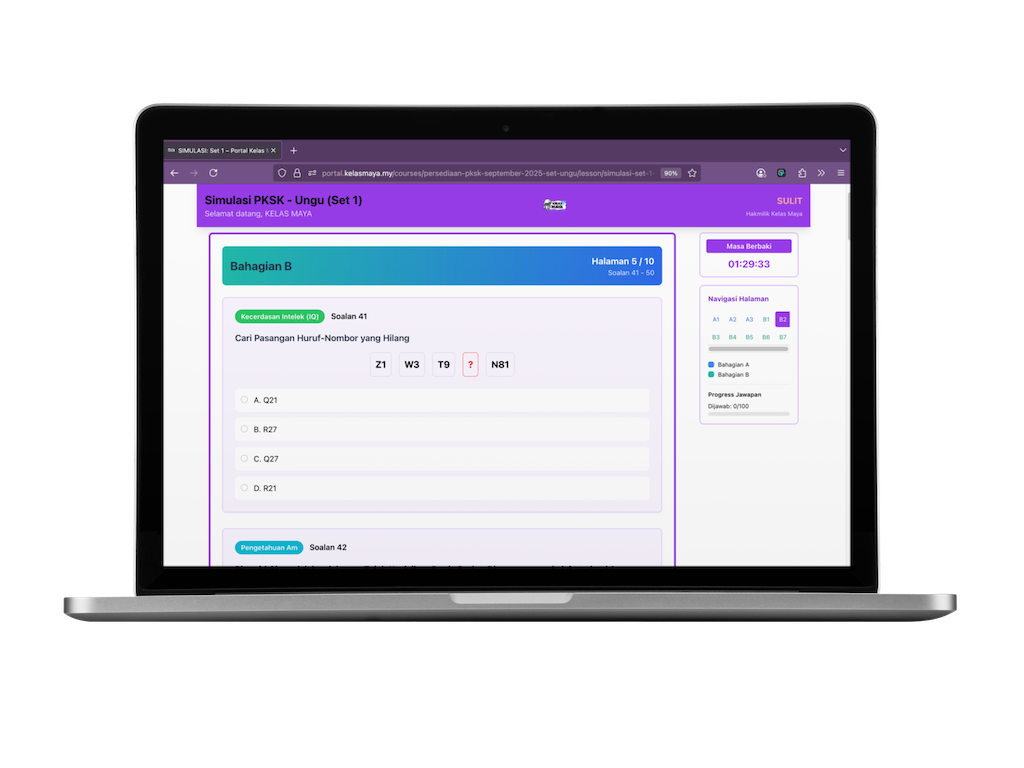
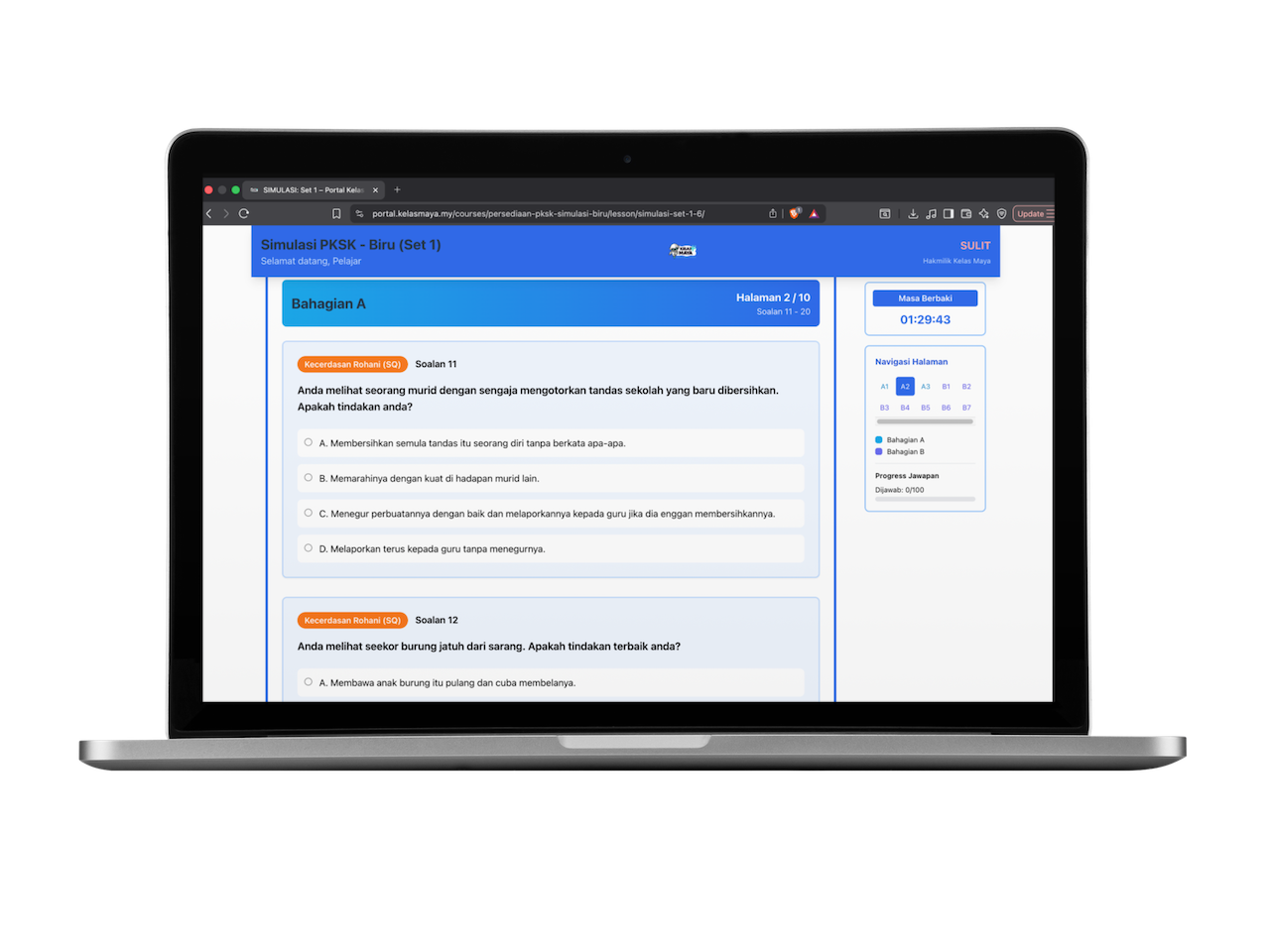
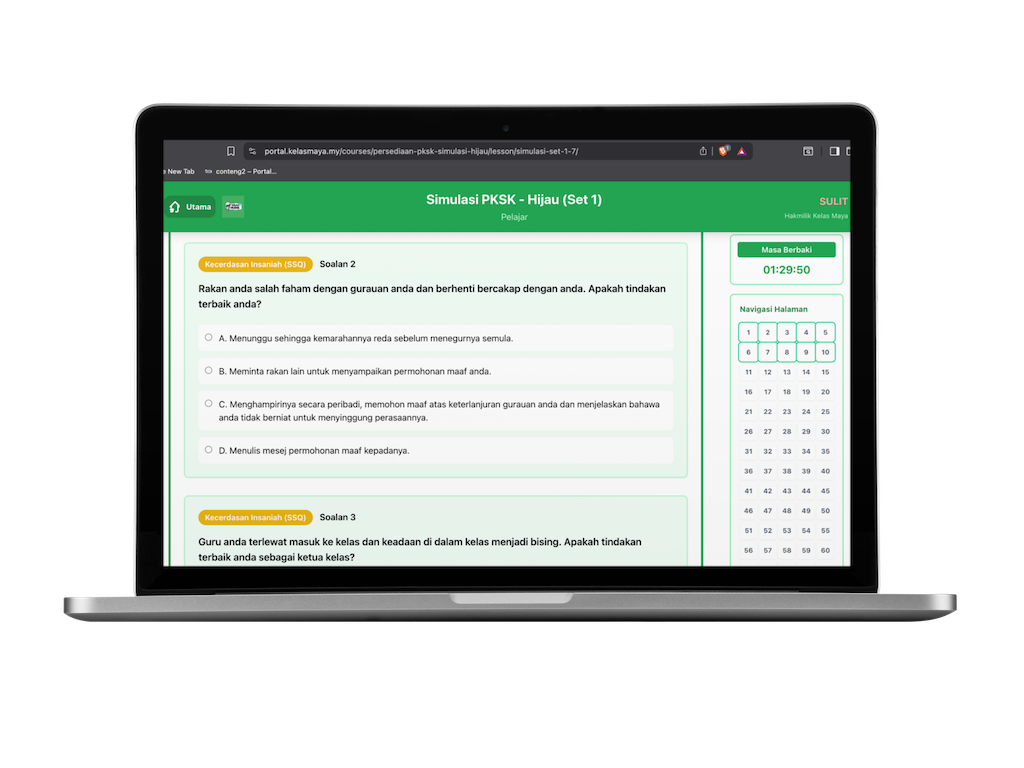
A student engages in a simulated exam environment, submitting a comprehensive response—ranging from short subjective answers to full essays.
2. Cikgu AI (AI Teacher) Grading & Evaluation
Instantly, the AI accurately grades the submission and evaluates argument coherence, critical thinking, and logical flow against the teacher-defined rubrics.
3. Actionable Feedback
The student receives their grade alongside hyper-personalized corrections in under a minute and is encouraged to simulate the assessment again, driving rapid mastery.
Essay Assessment Result
Topic: The Impact of Technology on Education
Your argument addresses the core prompt well. However, to achieve a higher band score, focus on deepening your critical analysis and providing stronger real-world evidence regarding the socio-economic impacts. See detailed breakdowns below.
Conceptual Gap Identified
"Technology improves education because it allows students to just use AI to do their homework faster."
Cikgu AI (AI Teacher) Suggestion
"Technology is highly beneficial in education when utilized as a tool to facilitate research and critical thinking, rather than a shortcut that bypasses the learning process itself."
Why: Corrects a fundamental misconception. Evaluates the student's understanding of technology's purpose, steering them towards academic integrity and deeper critical analysis.
Beyond Language Processing
Evaluating Deep Subjective Knowledge
To truly assist and collaborate with educators, AI must understand the world, not just syntax. Cikgu AI (AI Teacher) evaluates the factual, historical, and scientific depth of a student's open-ended response, proving its capability to handle complex real-world assessments.
Scientific Concept Mapping
In STEM subjects, the engine analyzes whether a student correctly applies scientific principles to real-world phenomena. It cross-references their subjective explanation with verified scientific facts.
Assessment Simulation
"The ice cube melted quickly in the box because the blanket made it warm."
Cikgu AI Grading:
Incorrect scientific concept. A blanket is an insulator, not a heat source. It traps existing heat but does not generate its own. Let's review the principles of thermal insulation.
Historical & Cultural Context
For humanities, the AI is capable of comprehending historical timelines, societal norms, and deep traditional customs and belief systems. It assesses if the student's narrative aligns with established historical consensus.
Assessment Simulation
Explaining the socio-economic impacts of traditional agrarian customs on early community formations in Southeast Asia.
Cikgu AI Grading:
Excellent analysis (High Band). You accurately connected the community's traditional belief systems regarding harvest seasons to their economic survival strategies, showing advanced historical critical thinking.
Insight to Action
Shortening the Feedback Loop
A grade or a score of 60% tells us how much a student knows, but a learning profile tells us why. By reducing the feedback cycle to seconds, we don't just assign a grade or mark an answer wrong—we immediately trigger a targeted pedagogical action.
Instant Diagnosis
We capture the crucial cognitive window. Instead of waiting days for a graded paper, the student receives comprehensive analysis while they are still highly engaged with the topic.
Beyond the Answer Key
A static book only says if an answer is right or wrong. Our simulation uncovers specific misconceptions in the student's thinking, constructing a holistic learning profile.
Targeted Next Steps
An assessment should not be the end of learning. The immediate feedback directs the student to the exact intervention, concept review, or practice they need to do next to improve.
"A wrong answer should not simply mean 'Incorrect'.
It should be the beginning of a better question:
What should we do next?"
Helping Better Students at a
Global Scale
Technology does not replace pedagogy, and AI does not replace teachers—it empowers them. By working together, teachers and AI transform static practice into dynamic, simulation-based learning. Kelas Maya makes meaningful feedback scalable, ensuring every student has the guidance they need to succeed.
∞
Potential Reach
< 1m
Feedback Time
100%
Personalized
24/7
Accessibility
Empowering the future of education.